
Also reckoned as the heart of India, Madhya Pradesh is a huge state located in central India is dotted with panoramic landscapes, caves, regal forts, temples, and exhilarating wildlife. This central state of India is flocked by foreign and domestic travelers throughout the year. There are several destinations that you can explore when you Travel to Madhya Pradesh. Due to its admiring and fascinating tourist spots, Madhya Pradesh is one of the traveler’s holiday goals and if you are also the one who is looking for a trip to Madhya Pradesh then check out the rundown of these top tourist destinations in the state.
1. Gwalior
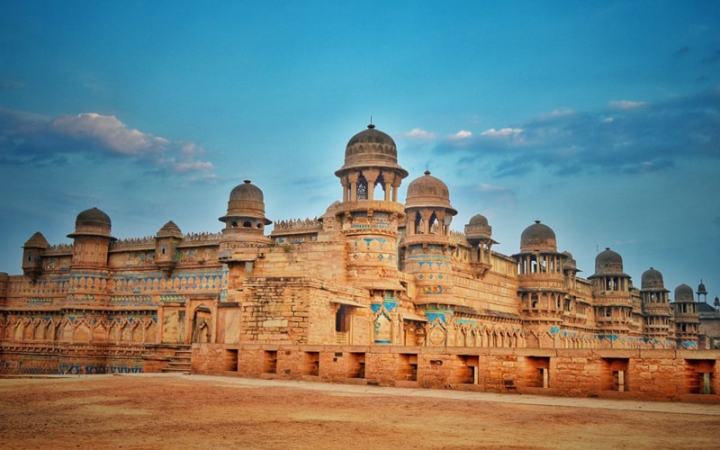
Not all castles and forts were built for the sole purpose of keeping enemies out. Travel to Gwalior will prove this statement, as the castles in the city are not just for protection, but self-expression as well. For some reason, the designers and builders of forts in Gwalior were able to show the beauty of life while creating something extremely useful.
History of Gwalior
According to legend, the city has been named after the sage who helped Prince Suraj Sen of the Kachwaha clan. The prince was lost in the jungle and was extremely thirsty when he met Gwalipa, who led him to a pond of water. The water not only took away his thirst but also healed him of his leprosy. Ever thankful, the prince offered his services to the sage, who requested for a wall that would protect the wise men of the hill. Not only did the prince build the fort, but he also built a castle within the fort and named in Gwalior. This name stuck, and eventually, it was acquired by the city that was established around the fort.
Tourism in Gwalior
The city has much to offer both travelers and tourists. Every tour of Gwalior would definitely include the Gwalior Fort. Built-in the 15th century, it provides all visitors with an awesome view of the city. This huge fort has been tucked on the top of the hill and its walls stand 35 meters high. The views of the city will definitely not be limited, as the wall curls around the fort for two miles.
Within the fort itself, there is a castle that bears the name Man Mandir. Whoever designed it had thought of giving the tourists with a sense of joy and love for life and used different colors and designs to achieve this effect. Tours of this castle would prove to everyone that even after having different room designs, all the designs could be made to come together as a whole to provide a desirable effect. This castle definitely leaves each tourist with a feeling of happiness.
A tour of the huge fort should definitely include the Sas-Bahu Temples. Though some would say that these temples were made for a mother-in-law and a daughter-in-law, the locals would say that is wrong. Saas-Bahu is the traditional name for two adjoining temples, and one would be larger than the other. The Larger of the pair contains the more elaborate carvings, with a beautiful lotus design sculpted on the roof.
Gwalior has so much more to offer every visitor and would promise to keep a tourist busy for days. When desiring a marvelous experience, this city should be on top of the list of considerations, a few other cities in the world will be able to provide the same charm as that of Gwalior.
Facts:
- Area:6 sq km
- Population: 830,000
- Elevation: 196 meters
- Geographical Location: 26° 8? 24? N, 78° 6? 0? E
- Climate: sub-tropical
- Primary Rainy Season: June to October
- Temperatures: 7 deg C to 40 deg C
- Languages: Hindi and English
- Best Season: October to March
- Places to Visit: Gwalior Fort, Man Mandir, Saas-Bahu Temples
2. Indore
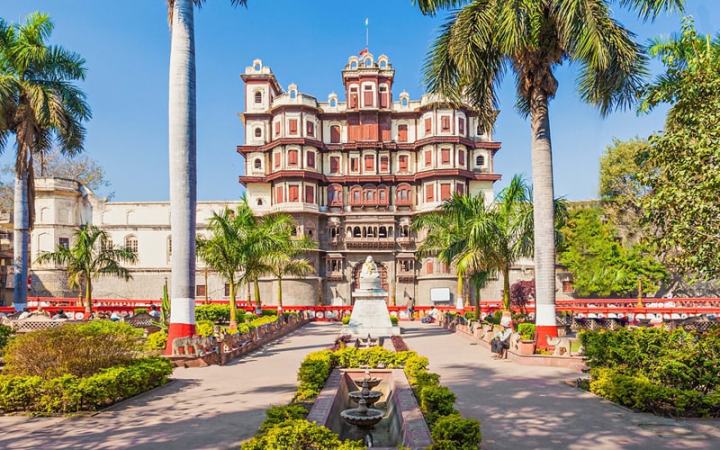
Indore known as “The Commercial Capital” of Madhya Pradesh presents a blend of historical past and rapid modernization. Nestled on the banks of Saraswati and Khan this city is literally the heart of India. Indore is also known as “Mini-Bombay” since it has a close resemblance to Mumbai. The royalty and the simplicity of this beautiful city and also the magical charm is its congregation of people from various religions and beliefs
Because of its latest technological advancements, several industries have set up their businesses in the city. Indore also boasts of various small as wells as huge commercial centers that include IT. Textile, and automobile. Besides the commercial developments, the city has also gained prominence as a center for educational excellence. Thousands of tourists call students from all across the globe, prestigious IIM (Indian Institute of Management) is located here.
History of Indore
Ruled Indore was under the rule of the Holkar dynasty and especially the Maratha Maharajas for a very long time. Malhar Rao Holkar (1694-1766) was believed to be the founder and the first ruler of the Holkar dynasty. His Daughter-in-law Ahilyabai Holkar succeeded him and ruled Indore from 1767 to 1795. In 1947 after the independence of India, Indore became part of Madhya Bharat which later merged into Madhya Pradesh in 1956.
Tourism in Indore
The most fascinating aspect of travel to Indore would be big shops & showrooms which include all national & International Brand. A big clothing market industry has flourished at Indore. Indore is also known for its ornate Sarees such as Maheshwari and Chanderi as well as the leather toys.
Indore being the fourth largest textile center in the country, be ready to shop from the umpteen variety of cotton garments on display through the streets.
The highlight of any visit to Indore has to be the food there. You must go to Chhappan and Sarafa to the different variety of street food on offer. If you are a vegetarian and you love food, then you would definitely enjoy your tour to Indore.
Festivals in Indore
Rang Panchami Festival is celebrated five days after Dhulandi. This festival is celebrated like Holi, the only difference being that colors are mixed with water after which they are either sprinkled or poured onto others. Traveling to Indore during festival seasons certainly has its advantages since you get to soak in the local culture even better. In earlier times, when textile mills flourished in Indore, the workers of these mills decided to contribute money along with labor so that they could do the arrangement of a carnival of flats known as “Jhanki”.
The monsoon brings out the best in Indore hence the best time to travel to this tourist site is between the months of October and March.
If you are touring India, then ensure that a trip to the heart of the country features in your travel itinerary.
Facts:
- Location: Madhya Pradesh, India
- Area: 3898 square kilometers.
- Population: 1,516,918
- Elevation: 550 Metres above sea level.
- Geographical Location: 22° 43″ 0’N, 75° 49″ 59’E
- Temperatures: Summer36°C – to 45°C, winter – 2°C to 3°C
- Languages: Hindi, Marathi, and English
- Best Season: October – March
- Places to Visit: Bada Ganpati Temple, Rajwada, Lal Bagh Palace, Gomat Giri, ISKCON Sri Sri Radha Krishna Temple, Crystal Temple, Annapurna Temple, Krishnapura Chhatri and Zoo.
3. Jabalpur
A lot of people take tours in order to witness awesome things, both natural and manmade. Being one of the largest cities in the state of Madhya Pradesh, Jabalpur encourages tourism because of both natural and manmade items. People visit the city in order to see how well the city has been developed, and they also take tours to see the awe-inspiring natural wonders nearby.
History of Jabalpur
The city of Jabalpur is very well known in the history of India. From the 9th century AD, the leadership of the city has been changing hands from one dynasty to another. Up until India’s struggle for independence from British rule, it is known that a number of people from Jabalpur have been martyred and shot from cannons in order to serve as examples for those who wish to rebel against England. The people of India have never been easy to convince though, and they fought through everything until they gained independence.
Tourism in Jabalpur
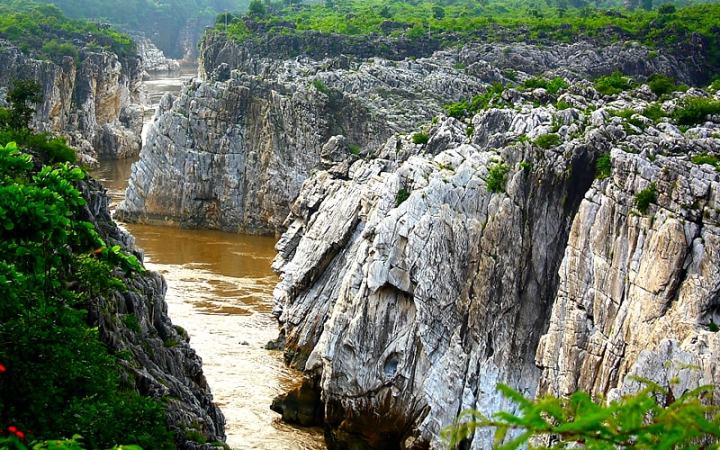
There are a number of sites to see in Jabalpur. However, there is an exotic variety of tours available it is quite sure that most, if not all, tours would include a visit to the Marble Rocks of the River Narmada. This is a 3-kilometer gorge that would be around 10 km wide. One both sides would be an impressive amount of limestone. The scene is impressive, especially underneath the moonlight. It would be good to time a journey to this area during the full moon to benefit from the romantic scene that it generates.
Most cities of India have a fort near it, and Jabalpur is not an exception. The Madan Mahal is a fort situated on a rocky hill, and it provides tourists with a panoramic view of Jabalpur as well as the area surrounding the city.
The Rani Durgavati Museum is also an important place to visit, as this shows not only artifacts that relate to the history of the city, but also a section devoted to Mahatma Gandhi. Mahatma Gandhi played a pivotal role in the fight for India’s independence. Some people even consider that he was the one who won the war for India, even though he believed in non-violence and brought so many other Indian heroes to this belief as well.
For nature lovers, there are two parks that one can easily travel to from Jabalpur. These are Kanha National Park and Bandhavgarh National Park. Both are known for the number of wildcats that roam freely throughout the park. Safaris and bird watching trips are available at both sites.
Jabalpur is a beautiful city holding both natural and historical significance. Every visitor will find a place of interest, and every tourist will find the visit relaxing and informative. No one should miss the possible opportunity to visit the city as wonderful and diverse as Jabalpur.
Facts:
- Area: 108,000 km2
- Population: 1,118,000
- Elevation: 411 meters
- Geographical Location: 23° 9? 38? N, 79° 56? 19? E
- Climate: sub-tropical
- Primary Rainy Season: July to October
- Temperatures: 9 deg C (Winter) to 42 deg C (Summer)
- Languages: Hindi, Marathi
- Best Season: Winter (October – March)
- Places to Visit: Marble Rocks of the River Narmada, Madan Mahal Fort, Rani Durgavati Museum, and Kanha National Park.
4. Khajuraho
Change is the only permanent thing in the world. This is definitely proven by the study of India’s history. With so many factions battling for supremacy, the change of leadership has happened so many times that the cultures of some villages or towns may have just changed, and some practices may have been forgotten. This is what makes Khajuraho a good choice while you are on your tour in India.
History of Khajuraho
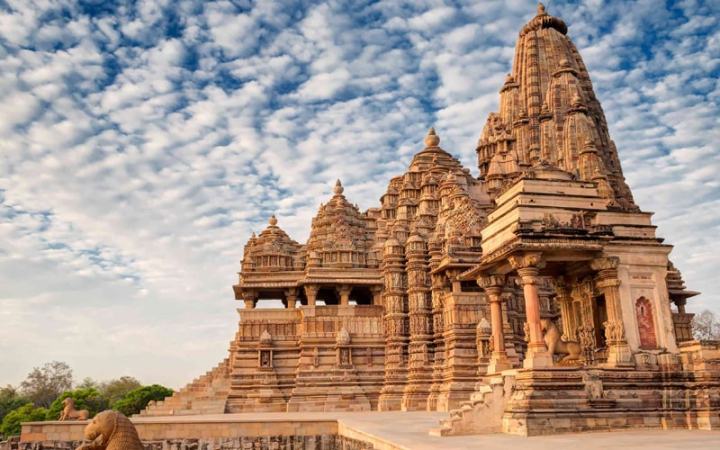
When invaders started attacking India during its early history, the ruling class at that time, known as the Rajputs, moved to central India. There they established an empire of their own and ruled for about two centuries. During this time of leadership, they created a political capital and a cultural capital. The political capital was where they stayed and made the decisions that leaders made. The cultural capital was made to flourish, and it was during this time that the 80 Hindu temples were made. Of the 80, only 25 stands. Currently, a dig is underway, and it is believed that this would yield one of the biggest temples of Khajuraho.
Travel to Khajuraho
An airport has been established about 5 km away from Khajuraho city and is the best and fastest way in. The other options that one would have to travel to the city are either train or bus. The train is the next best way to travel to Khajuraho. Though it may not be the fastest, convenience is offered through the different types of classes available. A bus ride may prove to be faster, but the bumpy ride throughout the towns may not be the best way to spend a traveling vacation.
Most would say that in order to take in the sites of the city, one should rent a bike and move around. If this is the plan, then be sure to travel to the land after the monsoon season so that the temperature would be good for moving around in the open air.
Tourism in Khajuraho
Being the cultural capital of an ancient people, there is much to see in Khajuraho. A tour of a single day might not provide enough time for one to see all the sites that are available, considering that there are a number of temples that cover 8 square miles of land. Each temple has elaborate carvings of people doing different things, from everyday activities to intimate actions. The awesome point about the whole place is that none of these huge carvings were put together by glue. All of them have precise joints that keep portions of the statues in place.
Conclude your day with the light and sound show is given by the western group of temples. One is in English, while the other is in Hindi. This show provides information about the area and its history. It definitely is worth the value in both entertainment and education and would be the perfect way to cap a tour of the awesome area.
Facts:
- Area: 8 square miles
- Population: 20,000
- Elevation: 283 meters
- Geographical Location: 24° 51? 0? N, 79° 55? 48? E
- Climate: Continental
- Primary Rainy Season: July to September
- Temperatures: 21- 45 deg C (Summer), 4 – 32 deg C (Winter)
- Languages: Hindi and English
- Best Season: October to March
- Places to Visit: Khajuraho temples
5. Pachmarhi

Some of the best places in India are located on higher ground, where one can escape the heat. Though no one may like this generalization, it is true considering that even the animals are seen in hilly and mountainous areas, such as Pachmarhi. This is why the town has become a haven for tourists, especially those who love nature and hiking in the woods.
History of Pachmarhi
It was a British captain named James Forsyth who first introduced the area to the attention of the British. Because of him, the place was converted into a place to rest for the British military. It, later on, it became the summer capital of the surrounding area. In 2009, UNESCO added the local forests to its list of biosphere reserves, as the forests around Pachmarhi contain several rare and exotic plant life.
Tourism in Pachmarhi
The majority of the Pachmarhi area is used by the armed forces of India, but there is a small town that is filled with civilians, and this town is able to answer the needs of the tourists. Within the village, there are already tourist lodges and other facilities that would be able to accommodate the needs of any tourist.
The, associated with Captain James Forsyth, still has most of its original structure but is now a converted museum. It would be a good idea to go through this museum as it would give any guest an overview of what could be seen in and around town. At this lodge is an open-air theater that shows films about animal life.
One sight close enough for a first-day tour would be the Pandav caves. These are 5 rock caves that are now protected monuments as it is believed that the Pandavas, who are one of the five sons of Pandu according to the Hindu epic Mahabharata, lived in these caves for a time. There is a belief that some of these caves some 20 centuries ago served as a home to the monks.
For the nature lovers, one of the first stops of the tour should be the Priyadarshini Point, known previously as Forsythe point. One of the highest points in the region, and it offers a good view of not just the town but the region as well. One of the eye-catching areas that one would notice from Priyadarshini Point would be Handi Khoh ravine, which is a sudden 300-foot drop from the edge.
Some people would think that tourism in high points does not involve water. Pachmarhi would disapprove of this though because the place has several places where people could enjoy a dip. For adventurers, there is the “Big Fall” of Rajat Prapat, which has a waterfall that is 110 feet high. For families, there is the Apsara Vihar that has pools for children.
If the target of the vacation is a relaxing journey with a little sightseeing on the side, then tour to Pachmarhi is a perfect choice. Whether with a loved one or with the whole family, the place will surely delight all tourists.
Facts:
- Area:01 km2
- Population: 10,000
- Elevation: 1,015 meters
- Geographical Location: 22° 28? 0.12? N, 78° 25? 59.88? E
- Climate: Cool
- Primary Rainy Season: July to September
- Temperatures: Summer: 18 – 35 deg C; Winter: 4 – 22 deg C
- Languages: Hindi and English
- Best Season: October to May
- Places to Visit: Bison Lodge, Pandav Caves, Priyadarshini Point
6. Sanchi

The holy city of Sanchi is well known in India for its exquisite works of Buddhist art. Sanchi is also known as Kakanaya during ancient times. Madhya Pradesh tourism would be incomplete without visiting Sanchi reckoned for its stunning pillars, Temples, Stupas, and monasteries. Travel to this most religious place of Buddhist pilgrimage is an amazing experience for the visitors.
History of Sanchi
Dating back to the epic age of 3rd century, it was the Mauryan Emperor Ashoka who built the Grand Stupa with the fascinating gateways among which eastern gateway depicts Gautama’s journey towards enlightenment, western gateway representing the seven incarnations of Gautama Buddha, northern and southern gateway depicts the miracles done by Lord Buddha.
Tourism in Sanchi
There are several tourist destinations in India offering various fascinating experiences to the tourists. At present, India is enlisted among some top travel destinations which drench your thirst with thrill and delight. Madhya Pradesh is a huge gorgeous state which has numerous appealing attractions and among which Sanchi stands upfront. Travel to Sanchi gives awe-inspiring experience to the tourists because of its archeological beauty which is a compliment to its spiritual richness.
Sanchi boasts of a cluster of various tourist attractions and is located at a distance of 10 Km from Sanchi, Vidisha known as Besnagar is a place where Ashoka found his better half. Heliodorus Pillar which is dedicated to Lord Vishnu is situated in Vidisha. Udayagiri Caves, another nearest destination serves to depict the richness of the Gupta dynasty. Tour to Sanchi would be incomplete without visiting the oldest Gupta Temple which has a glorious historical past and is often referred to as artistic marvel. Sonari and Satdhara are next in the list situated at a distance of 10 km from Sanchi. There are eight stupas in Sonari and about two Stupas in Satdhara. The nearest airport situated at a distance of 46 Kms at Bhopal is an added advantage to international tourists. Biodiversity, varied aspects of tourism, has made it the best place for nature and wildlife lovers. To enjoy this adventure and explore the sightseeing of Sanchi select our travel package and embark on a peaceful journey.
Shopping
Also, there are only a few opportunities for shopping in Sanchi, visitors can opt for brassware, terracotta, shell works, crochet, carved furniture, bamboo works, etc. The nearest city of Bhopal is rich in handicrafts where the tourists would love to choose muslin, Jutis, embroidered Indian Garments, and leather works.
Climate
Since it experiences a temperate climate Sanchi can be visited at any time of the year. It has a maximum of 45 °C during summer months and a minimum of 10 °C during winters.
Best Time to Visit
The best time to visit Sanchi is anytime between the months of October and March since the weather remains pleasant and the beauty of Sanchi is at its best.
Facts:
- Location: Madhya Pradesh, India
- Population:6,785
- Geographical Location:480656°N 77.736300°E
- Temperatures: Summer – 45 °C, winter – 10 °C
- Languages: Hindi, English
- Best Season: October – March
7. Maheshwar
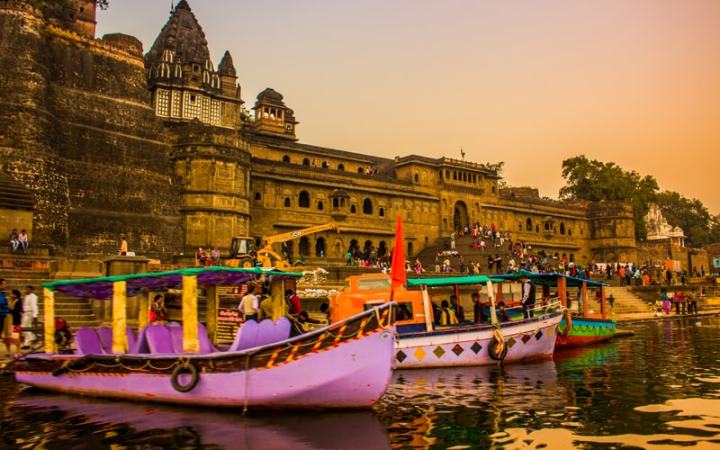
Maheshwari silk-blend Sarees., and the city is a cultural blend of history and religion. A temple town with a glorious history reflected in the present magnificent buildings and structures of Splendour. As old as the Indus Valley civilization, Maheshwar means ‘Abode of Lord Shiva’. True to its name, a multitude of Hindu temples can be found in this quaint town found on the bank of the Narmada River.
History of Maheshwar
Charming Maheshwar, once known as Mahishmati, has a 4,000-year-old history and is mentioned in the Hindu epic, Vedas. Akhbar once extended his reign to this antique town in the early 1600s. The end of the Mughal rule in 1741 soon paved the way to the glorious years under the Holkar Dynasty. Maharani Ahilya Bai of the Holkars made Maheshwar the capital in 1766 and her astute rule brought the state peace and prosperity that left a mark that is still visible in the present times.
Tourism in Maheshwar
The Maheshwar Fort also called the Ahilya Fort is a must-visit tourist destination. It is now a heritage hotel, run by the descendants of the Holkar Dynasty and the Prince is known to join guests and spotted by the public. Despite being a super stunning and magnificent hotel, this simple looking yet unbelievably grand monument has public areas where one may learn the glories of the Holkar Dynasty which was solely responsible for the prominence of this humble pilgrim town. The fort stands tall along the river Narmada, with the Ghats (broad steps, act as a riverbank, Leading to rivers) popular with visitors. The imposing front gate warmly welcomes visitors to view the museum within. A life-sized statue of Queen Ahilya Bai can be seen on the fort grounds. The intricate art and carvings on the wall are beyond description. The earth Coloured fort takes on rainbow hues at night when the different colored lights illuminate the grand building.
The Ghats
The Ghats of Maheshwar, named after the previous dynasties – Peshwa, Ahilya and many more- are the prominent travel destination for pilgrims and tourists to learn another facet of the Hindu religion. Ritual scenes of devotees praying and taking a quick dip into the peaceful river Narmada is a common sight along the Ghats. A more Sombre sight is the stone memorials of widows who had been burnt alive-by choice or compulsion-in the husbands’ funeral pyre, a ritual called Sati, now banned in India. History records that the daughter of the great Maharani Ahilya Bai chose the same path despite her mother’s pleas to consider otherwise.
The numerous temples dotting the Ghats are towers with historic tales of Maheshwar. While the Krishna temple is one of the most popular temples with all visitors to Maheshwar, the others include Kaleshwara, Rajarajeshwara, and Ahileshwara.
Facts:
- Population: 21,500
- Elevation: 154 Metres
- Geographical Location: (coordinates) 22.11°N 75.35°E
- Climate: Tropical
- Primary Rainy Season: July to September
- Temperatures: Summer 33-44°C, Winter 10-27°C
- Languages: English, Hindi, Bengali
- Best Season: July to March
- Places to Visit: The Maheshwar Fort; Temples- Sahastrarjun, Rajarajeshwara Temple, Kashi Vishwanath Mandir, and others.
I hope you find this article compiling top tourist destinations in Madhya Pradesh helpful and informative. We are also excited to know which places are you going to explore in the city so do let us know in the comment box below.
 Trip Travel Explore
Never expected these interesting places
LikeLike
Thanks!!
LikeLike
My pleasure
LikeLike