
Being one of the most sacred and the most populated cities in the country, Uttar Pradesh is dotted with various sightseeing destinations where each makes you feel “wow” moment. This beautiful city is believed to be one of the best destinations and also the best representative of the nation where people of different castes, creed, and religions live together. It has been reckoned as one of the best destinations where you can witness the perfect blend of vivid cultures, values, and traditions. On your Travel to Uttar Pradesh, you can also participate in the grand Kumbh Mela, the major attraction of the state which is participated by thousands of tourists flocking from all across the globe.
1. Agra
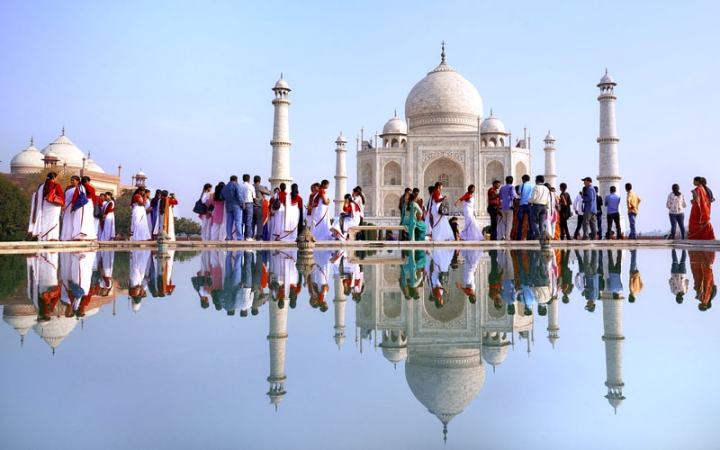
The first thing that strikes your mind when you think about Agra, India, is, of course, the Taj Mahal, but to truly explore Agra there is much more to be seen than just the Taj, the precious gem of India tourism.
Tourists who travel India often overlook the rest of the town in their burning desire to see the Taj Mahal. However, we say there is far more to Agra than meets the eye. For those who travel India, there is a gorgeous fort and also many mausoleums and tombs are there that add a fascinating look into the legacy that the Mughal Empire left behind. Agra sits on a large bend in the river Yamuna, a river considered holy here in India.
Tourism in Agra, India
There are many places worth visiting in Agra, but we have picked the most interesting ones- the Taj Mahal, Red Fort and Fatehpur Sikri, a historical town near Agra.
The Taj Mahal in Agra
Agra is a city of architectural wonders including Red Fort, Fatehpur Sikri, and the Taj Mahal. But it is the Taj that captures the attention of most tourists on their India tours. The stunning white marble monument to love, it has inspired poets, writers, and lovers everywhere. Taj Mahal is reckoned as one of the most impressive buildings in the history of mankind. The story is that the Mughal emperor Shah Jahan’s favorite wife passed away in 1631 and in her memory, the Taj Mahal (Crown of Palaces) was built. It is her mausoleum and they are both buried there. It is said that there were rumors that the emperor was planning to build a black replica across the river for himself but his son overthrew him and killed his 3 brothers to secure the throne for himself but their plans had never been able to succeed in their plan.
Taj Mahal is the perfect example of the Mughal architectural style that is combining the elements of Indian, Turkish and Persian architecture. It is actually a complex that encompasses five areas: the first area would be the Moonlight Garden, a beautiful garden that was built in front of the mausoleum and is separated from it by the river Yamuna. The second area is the terrace area with the Tomb itself and the mosque. The third area consists of gardens (Charbagh), in a fourth area other toms were placed and the final, fifth area is a bazaar. The central part is the Tomb, impressive cube with four minarets in its corners and a big dome made of white marble. The main chamber is where the sarcophagi of Mumtaz and Shah Jahan are placed, but their real graves lay at the lower level of the Taj Mahal. The interior decoration of the Taj Mahal cannot be expressed in words but cannot be seen. The best artists of that era were engaged in the task, and they have created a unique masterpiece of immeasurable value. Precious, semi-precious stones, and also the finest articles were used to decorate this complex, geometrical and plant motifs, and inscriptions on the walls.
Every year, between 2 and 4 million people visit the Taj Mahal. Almost every India tour package has visited the Taj Mahal as part of its itinerary. It is one of the most recognized buildings in the world and it gives a huge boost to India’s tourism.
Red Fort in Agra, India
Agra Fort, also known as Red Fort, is a precious historical and architectural gem, proclaimed as UNESCO World Heritage Site, located 2 km from the Taj Mahal. In 1080 it was mentioned for the first time but its real glory begins in the 15th century, when Sikandar Lori, Sultan of Delhi started to live and rule from the fort. Famous for its seventy feet high walls made of red sandstone and four mighty gates of which the Delhi Gate is the most famous, as it was built by Akbar and served as his formal entrance to the fort, showcasing the strength and the prosperity. With beautiful decorations consisted of, otherwise forbidden images for Islamic architecture, Agra Fort would be much better described as a fortified city, with several palaces and three mosques inside of it. Pearl Mosque, (Moti Masjid), was constructed with a motive to avail residence for the members of the court, and the second one, Heavenly Mosque, (Mina Masjid) was a private mosque of the ruler. The third mosque was used only by women of the court. One of the most impressive buildings inside of the Red Fort Complex is the Jahangiri Mahal, built by Akbar. This palace was reserved for women belonging to the royal household. Rulers kept their treasure in Agra, and the legend says that together with the fort, Mughals captured one of the world’s biggest diamonds Koh-i-Noor (aka Mountain of Light), now part of the Crown Jewels, as it was given to Queen Victoria in 1850. In 1857. The Fort was a battle site during the Indian rebellion that ended the rule of Britain.
Fatehpur Sikri in Agra, India
This stunning architecture was established by Akbar, son of Humayun, to honor a great Sufi saint, Salim Chisti who foretold the birth of his son, and later, his heir, Jahangir. He thought of moving the capital from Agra to Sikri. The planning and the building of this new city lasted 15 years during which Emperor himself was greatly involved. The city was supposed to be surrounded by a wall, to have a mosque and living quarters worthy of Akbar himself. There were many palaces, harem buildings, and other supporting structures. The city was constructed in Persian style but with obvious Indian influence. It is a shame that it had to be abandoned shortly after the construction was finished due to problems with water supplies. Today, Fatehpur Sikri looks like a town of ghosts and is a very popular tourist Destinations for those are exploring Agra while on their India tours. Important buildings inside this city are Tomb of Salim Chisti, Buland Darwaza, the entrance to Fatehpur Sikri, the mosque, the palace of Akbar´s wife Mariam and the House of Worship that was supposed to be the meeting place for Akbar´s new religion followers.
Agra City, Modern and Ancient
The impressive past of Agra and its citizens is obvious at almost every turn and it is brilliant to see that the older city has retained much of its splendor. This is ultimately one of the most captivating destinations in India. Agra is part of the so-called Golden Triangle, together with Delhi and Jaipur, and most India tours will take you to those places. But besides being archaically historic Agra has overtones of modernity as you are likely to find in lots of India’s cities these days.
Obviously in a city like Agra, where its attractions are known worldwide tourism has a huge role in the economy. But the city also has a large industrial base for business. The city is home to several manufacturing industries and plants related to wholesale markets situated in Agra.
Sloth Bears Rescue Facilities in Agra, India
Something a little different here in Agra is the Agra bear rescue facility. Not so long ago the road between Agra and Fatehpur Sikri was crowded with dancing sloth bears. These days the practice still unfortunately exists but this facility is the first of its kind in India and is also the largest in the world. This is a brilliant place to visit during your India tour package.
Facts:
- Area:40 km sq
- Altitude: 171m
- Geographical Location: 27°11’N 78°01’E? / 27.18°N 78.02°E
- Climate: long hot summers and cold winters-semi arid
- Rainfall: 400 mm
- Primary Rainy Season: July to September
- Temperatures: -4.5C to 45C
- Language: Hindi and Urdu
- Population: 1,400,000
2. Lucknow

Lucknow has always been a multicultural city and it’s the home to stunningly beautiful gardens, poetry, music, and great cuisine.
Home of the famous residency in Lucknow. But the residency isn’t the only gem here, there are two brilliant mausoleums, many British Raj-era buildings and enough interesting history to entertain the buffs but there are none of the annoyingly many throngs of tourists that can make a brilliant trip tedious.
Mostly reckoned as the city of Nawabs or the golden city and the people here love to show off their culture and hospitality.
Lucknow’s’ Famous Grace and Economic Boom
These days Lucknow has enjoyed an economic boom and while it isn’t considered a major metropolitan city it is the second largest in Uttar Pradesh and among the top ten of the fastest-growing non-major metropolitans. Known for its culture, grace and a well throughout pace in life have contributed to a unique experience for tourists and visitors to Lucknow.
Lucknow is famous for having Asia’s first human DNA bank which is the world’s second bank that has a DNA identification system. This bank has been established in the biotech park and is under a private partnership with IQRA biotech services.
Geography and Climate of Lucknow
A stunningly vibrant city, Lucknow is a busy metropolis and is situated on the Gangetic plain. Encircled by a chain of small villages as well as towns, Lucknow is the perfect spot if you are hoping to visit some genuinely India villages during your vacation in India. With a humid subtropical climate, many people will not be out of their league when it comes to the heat although summers here are dry and hot.
Cultural Tourism in Lucknow
Lucknow has never lost its relevance to the people because of its history and culture and it is said that this city inspires in such a way that people who haven’t experienced such wish for it. It is an important center for Muslims in South Asia and the city has a series of courtly manners that remind us where they have come from and what an enriched background the city has.
Because Lucknow has an amazing history the city has many monuments that tourists and visitors can view and appreciate. And a major series of Imambara is available to see here. An Imambara is the Tomb of a Holy Muslim Man and after mosques and mausoleums, they plan a very important part in Islamic Architecture. The most famous of these found in Lucknow are Chota Imambara, Bara Imambara, and Shah Najaf Imambara, which are the sites of annual Azadari of which a translation means mourning sessions; these occur in the Islamic month of Muharram. The Marcia sessions and Tazia processions of the old city are well known in Lucknow and so are its foods.
Culinary Delights in Lucknow
The food of Lucknow is a culinary delight and it has been said that there is none that rival Lucknow for its food so easily being identifiable with its region. It is well worth finding some traditional cuisine here, and if you do you will witness the incomparable highlights of Lucknow. Kabobs are one of the local specialties along with Kormas, Kaliya, Roomali Rotis, Nahari-Kulchas, Zarda, Sheermal, and Warqi Parathas. In short Lucknow is gastronomic heaven that must be indulged in.
Facts:
- Area: 2,345 km sq (1,453 sq mi)
- Altitude: 123 M
- Geographical Location:85°N 80.92°E
- Climate: warm humid subtropical climate with cool, dry winters and dry, hot summers
- Rainfall: 101cm
- Primary Rainy Season: July to September
- Temperatures: 3c-45c
- Language: Hindi, Urdu, and English
- Population: 3647834
3. Rampur
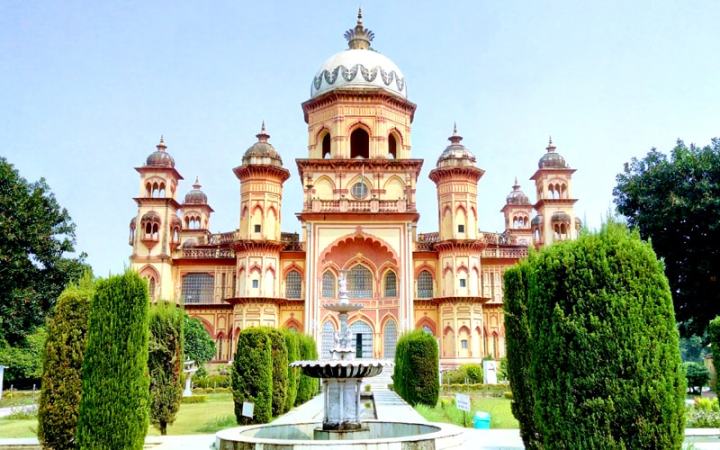
Once the capital of the Bushahr Empire, Rampur is one of the biggest commercial centers in North India today. India’s culture was given birth within these lands. The Nawabs that ruled Rampur throughout the dynasties established a home for literature and several forms of the art. India’s cultural identity dwells in the acreages of Rampur. Lavi Fair is one of the most popular fairs in India that takes place in November, and it is the biggest tourist attraction of Rampur.
History of Rampur
The city of Rampur was founded by Nawab Faizullah Khan in 1775. The city was given protection by the East India Company, hence under British protection. Rampur is known to be a district of politics and culture. Due to the Rohilla War, the Nawab was forced to find a new city. As the years passed, several Nawab rules descended. Within this district, Islam is fortified along with other Indian religions.
Tourism in Rampur
Touring Rampur can prove to be a phenomenal and knowledgeable experience. As you spend your momentous time in Rampur, you will learn of aged Indian culture that still resides in the sands of Rampur.
Literature
The rules of Rampur have always established a strong pyramid of literature. Years were spent on the collection of Arabic, Turkish and various other Oriental Manuscripts. These manuscripts are housed within the Rampur Raza Library, the largest well-known library in all of India for its endless bookcases of knowledge and history.
Cultural Art
The rulers of India gave birth to the renounced culture of Indian Classical Music. For generations, Indian Ustads (teachers) taught various types of Indian instruments, such as the Veena. Different styles of Indian music were created and passed on.
Cultural Foods in Rampur
The most predominantly famous foods of India originated from Rampur. Foods such as biryani, kabobs, mutton, kormas and several other famous recipes are the heart of India. India is globally known for its spices and exotic food.
City Life and Tourist Attractions in Rampur
Rampur brings to you’re the Padam Palace, built-in 1925. This garden temple is open to all visitors whether it is a tourist coming from any corner of the globe. It is simplicity beautified. Rampur also brings to you the four days famous annual Lavi Fairs. The famous fair takes place once a year and brings traders from all over India. People come to share aspects of business, tradition, and culture. You can buy almost anything – famous handspun woolen clothes and handicrafts of any kind. A fair you shouldn’t miss it!
Rampur is the city of Indian ancestry. Filled with aged culture and religion, the true Identity of Indian culture is born right here, in Rampur. Travel and Tour the aged face of India.
Facts:
- Population: 920
- Elevation: 1350
- Geographical Location:45°N 77.63°E
- Climate: warm and temperate
- Primary Rainy Season: July to September
- Temperatures: Summer temperatures can sometimes reach 40°C, and winter can go below 0°C
- Languages: Hindi, English
- Best Season: all year round
- Places to Visit: Padam Palace, Nirath village near Rampur with its temples, Sun Temple and Bhimakali Temple, Dutt Nagar village with the temple dedicated to Lord Dattatreya.
4. Mathura
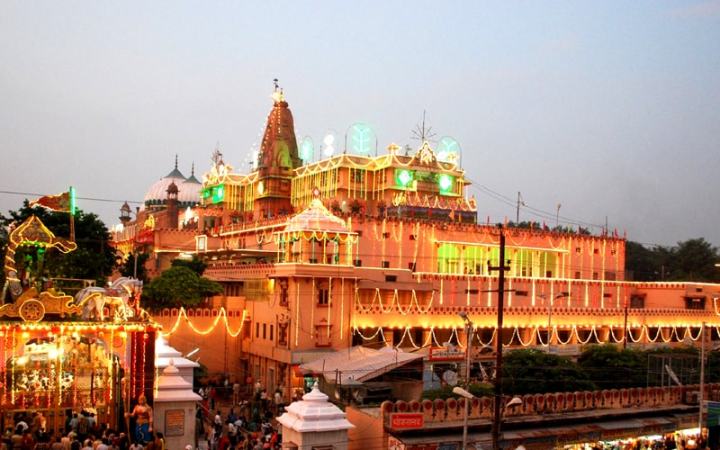
A lot of cities in India have rich, historical backgrounds. None are as extensive as that of Mathura though. A quick tour of the city would be able to prove that much has happened to it from the time it was born. One of the noticeable traits of the city is the prominence of Buddha in and around the area. The city has been noted to be one of the greatest producers of Buddha figurines.
History of Mathura
Much has happened to this area within its lifetime, and the oldest record of it is in the Ramayana. This book states that this is where Lord Krishna, the reincarnation of Lord Vishnu, was born. From that time, approximately the 3rd century BC, the land was ruled by one empire and then another. During the reign of the Maurya Dynasty, the city became the seat of Buddhism. Upon the collapse of the empire, Buddhism was spread all across the country. A lot of other rulers took over the place, and some even destroyed the existing Hindu temples to replace them with mosques. Today, each ruler has some sort of memory in the city, but it has adapted well and has a lot of other important infrastructures, such as the largest refinery in all of Asia.
Tourism of Mathura
Mathura is one of the seven most important cities for devout Hindus. This is because it is one of the places where Moksha, or total release, may be obtained. A lot of the income generated by tourism is from Hindu pilgrims. Pilgrims are not the only people who visit this particular city as well though as foreign tourism has already started to pick up as well.
A temple known for its exquisite architecture lies in the eastern portion of Mathura. Maintained by the Vallabha sect, the Dwarkadhish Temple is toured by many people on a daily basis as it is almost two centuries old and is still intact up until this day. It is easily visited because it lies in the middle of the city of Mathura.
Those who wish to learn more about the Indian culture and their icons may visit the government museum that is situated at Dampier Park. Here one will see a lot of items that span 400 BC – 1200 AD. Images of Buddha, as well as other icons of the area, would be seen here,
Of course, locations of historical significance would also be able to generate a lot of tourism, and the birthplace of Lord Krishna is definitely important enough to generate quite a bit of tourism. Visited by pilgrims and tourists alike, the Krishna Janmabhoomi gets a lot of attention for its role in Hindu history.
Mathura is a location that gets a lot of attention not just for its historic significance but its current role in the county’s economic advancement. A visit to this place would definitely merit a tour, and whether planning to come here for business or pleasure, a look at life in the city would prove to be extremely fun and useful.
Facts:
- Area:37 km2
- Population: 299,000
- Elevation: 174 meters
- Geographical Location: 27° 27? 0? N, 77° 43? 12? E
- Climate: tropical
- Primary Rainy Season: July – September
- Temperatures: Summer: 22 – 45 deg C; winter: 4 – 31 deg C
- Languages: Bhasha (a dialect of Hindi)
- Best Season: October – March
- Places to Visit: Dwarkadhish Temple, Krishna Janmabhoomi, Dampier Park
5. Vrindavan
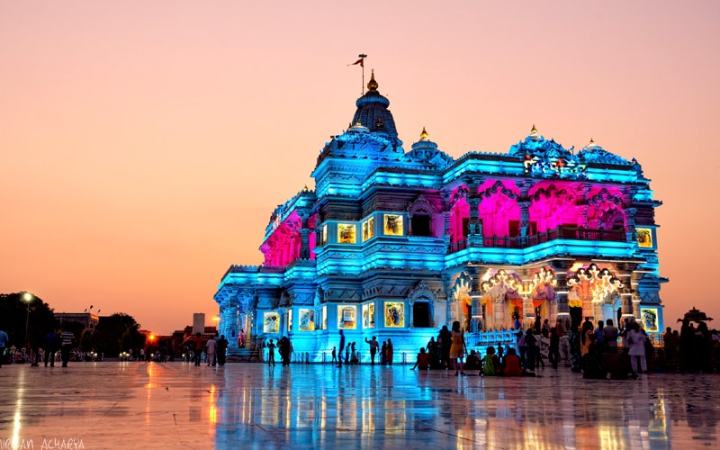
Nestled almost 15 km away from Mathura, Vrindavan is dotted with almost 5,000 temples it is a spiritual destination in India. Vrindavan – The City of Temples, synonymous with Lord Krishna’s childhood years is an important pilgrimage destination for Hindus. It attracts over 500,000 devotees annually, especially during chief festivals – Janmashtami, Holi, and Radhashtami. The temples here are architecturally the most advanced in North India. It is the center for centuries-old tradition Vaishnava – widows spend their lives in solitude here.
History of Vrindavan
Vrindavan receives its name from the sacred Tulsi (basil) plant. The town was founded in 1590 with the creation of the Govinda Deo temple. Popular belief states, the town was once a Tulsi grove, while others believe it was named after Krishna’s consort -Vrinda Devi.
Due to the urbanization, the hugely expanded Vrindavan forest has been subjected in the last 250 years, initially by Kings and today by apartment developers. Unlike ancient times, the local wildlife, including peacocks, cows, monkeys, and birds has considerably squeezed. Today, cows are found only in gosala of the main Ashram of Vrindavan.
Tourism in Vrindavan
Vrindavan, being a spiritual destination in India is overflowing with temples. Other points of interest include Seva Kunj, Kesi Ghat, Raj Ghat, Kaliya Ghat, Raman Reti, Kusuma Sarovar, Imli Tal, Varaha Ghat and Chira Ghat. The Samadhi (mediation seat) shrine of Devraha Baba, a revered saint of the last century is a short boat-ride away.
The four main temples where devotees flock in huge numbers are Madan Mohan, Gopinath, Govinda Deva, and Jugal Kishore.
Madan Mohan Temple, 60 feet high, built-in 1580 on a 50 feet hill – Dwadasa Aditya Tila, adjacent to the river Yamuna. Established by Srila Sanatana Goswami, it was the first Gosvami temple created in Vrindavan. It houses the Bhajan Kutir, Samadhi of Sanatana Goswami, Pushpa-Samadhi of Tapan Mishra and Chandrasekhara Acarya.
Banke Bihari Temple, built-in 1862 is the most popular shrine at Vrindavan. Swami Haridas a strong devotee of Krishna discovered the image of Banke-Bihari in Nidhi Vana.
A wealthy Jeweller – Shah Kundan Lal of Lucknow, built Shahji Temple, renowned for its magnificent marble sculpture and twelve spiral columns each 15 feet high, in 1876. Its’ Durbar Hall – Basanti Kamra is famous for Belgian glass chandeliers and fine paintings.
Jaipur Temple with unparalleled workmanship is an opulently embellished sandstone temple, dedicated to Sri Radha Madhava. Maharaja of Jaipur- Sawai Madho Singh II built it in 1917.
Govind Devji Temple was the architecture constructed in the year 1590, displays a unique combination of Western, Persian, and Indian architecture. It was a magnificent seven-storied structure built in the form of a Greek that was later destroy6ed by Mughal ruler Aurangzeb.
Sri Radha Raman Mandir constructed around 1542 by Gopala Bhatta Goswami is amongst the exquisitely crafted and revered temples of Vrindavan. Even today, the original Shaligram deity of Krishna, alongside Radharani shines with reverence.
The Seva Kunj is believed to be the site where Lord Krishna used to perform Ras Leela with Gopis and also with her lover Radha Rani. In addition, the Samadhi of Swami Haridas, Tansen, the great musician, situated here. Swami Haridas Sammelan is organized annually to show honor and immense respect to this legendary musician and in this annual celebration renowned Indian musicians participate.
Facts:
- Elevation/ Altitude: 170 m (558 ft)
- Geography: North Latitudes: 27.58° East Longitudes: 77.7°
- Climate: Extreme, Tropical Monsoon. Summer Temp: 45°C Max 30°C Min, Winter Temp: 28.8°C Max 5°C Min.
- Population: 56,618
- Languages: Braj, Hindi, English
- Best Season: October- March
- Tourist Attraction: Palaces, Gardens, Museums, Temples, Boat rides
Although there are several tourist places in the state I hope that the article is going so long so let’s end it up. If you find this article helpful and informative then do write your feedback in the comment box. Also, if you want us to bring some more informative articles like this then do let us know through Facebook or e-mail.
 Trip Travel Explore
Wow thankyou for the info. I have visited these places but I learnt a lot from your blog that I didn’t know. Keep blogging
LikeLiked by 1 person